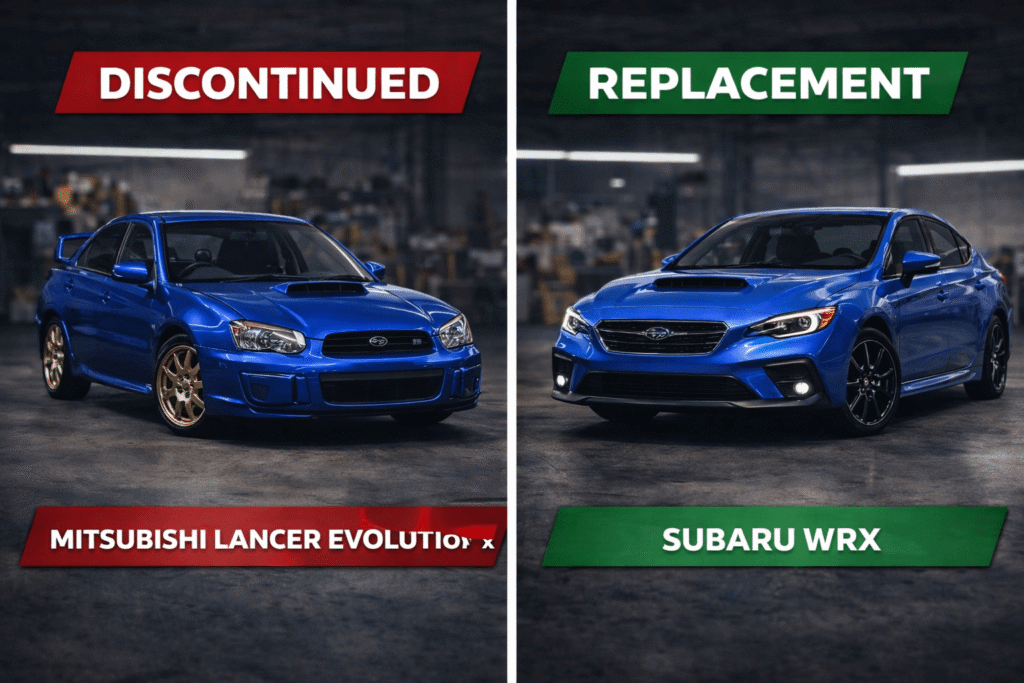
Many iconic JDM cars are no longer in production, leaving enthusiasts wondering why some of the most loved Japanese performance models disappeared from manufacturer lineups. The reasons are not simple, and they go far beyond a lack of demand. Instead, market evolution, regulations, and shifting consumer priorities played a decisive role.
Understanding why these cars were discontinued helps explain how the automotive industry has changed—and what has taken their place.
Changing Market Demands
During the 1990s and early 2000s, compact sports cars and high-revving performance models were a central part of Japanese automotive identity. Over time, however, global consumer preferences began to shift.
Buyers increasingly favored:
-
Practical daily vehicles
-
Improved fuel efficiency
-
Comfort and technology features
-
Lower ownership costs
As demand moved toward crossovers, sedans, and more versatile vehicles, manufacturers adjusted their product strategies accordingly.
Stricter Emissions Regulations
One of the most significant factors behind the disappearance of many JDM cars is emissions regulation. Older high-performance engines were designed in an era with fewer environmental restrictions.
Modern emissions standards require:
-
Cleaner exhaust output
-
Advanced catalytic systems
-
Complex engine management strategies
For some classic performance engines, redesigning them to meet these standards was not economically viable. As a result, manufacturers chose to discontinue certain models rather than completely re-engineer them.
Evolving Safety Requirements
Safety regulations also became more demanding over time. New rules require vehicles to meet strict crash, pedestrian safety, and structural standards.
Classic JDM sports cars often featured:
-
Lightweight construction
-
Compact dimensions
-
Minimal driver assistance systems
While these characteristics contributed to an engaging driving experience, adapting them to modern safety requirements would have required significant changes to vehicle design.
Rising Development Costs
Producing low-volume performance cars is expensive. As research, development, and certification costs increased, manufacturers focused resources on vehicles with broader market appeal.
In many cases, JDM performance models were:
-
Niche products
-
Limited in global reach
-
Costly to update for new regulations
This made it difficult to justify continued production in a competitive global market.
What Replaced Classic JDM Models?
While many traditional JDM cars disappeared, they were not entirely replaced by direct successors. Instead, manufacturers introduced new types of performance-oriented vehicles designed for modern expectations.
These replacements often emphasize:
-
Turbocharged efficiency
-
Advanced electronics
-
Broader usability
-
Improved comfort and safety
Rather than lightweight sports coupes, performance branding shifted toward models that could appeal to a wider audience while still offering strong driving performance.
Performance Philosophy Has Changed
Classic JDM cars focused heavily on mechanical engagement and simplicity. Modern performance cars rely more on software, electronic aids, and integrated systems.
This change reflects:
-
Advances in automotive technology
-
New safety expectations
-
Customer demand for convenience
While the driving experience has evolved, the goal of delivering performance remains — just in a different form.
Why Enthusiasts Still Miss These Cars
Despite modern alternatives, many enthusiasts continue to miss discontinued JDM models. These cars represented a unique balance of engineering, accessibility, and driver involvement.
Their absence has contributed to:
-
Rising values of used examples
-
Increased interest in restoration
-
Strong aftermarket support
For many fans, these cars symbolize a special era of Japanese automotive design that cannot be fully replicated today.
Conclusion
Certain JDM cars are no longer produced because the automotive world has changed. Market trends, environmental regulations, safety standards, and rising costs reshaped manufacturer priorities.
While modern vehicles have taken their place, the legacy of classic JDM models remains strong. They continue to influence design, inspire enthusiasts, and define what many consider the golden era of Japanese performance cars.
